
媳妇的美好时代
서울시 “그린벨트 해제 검토, 용산공원 주택공급 철회가 전제”_我的网站

A |
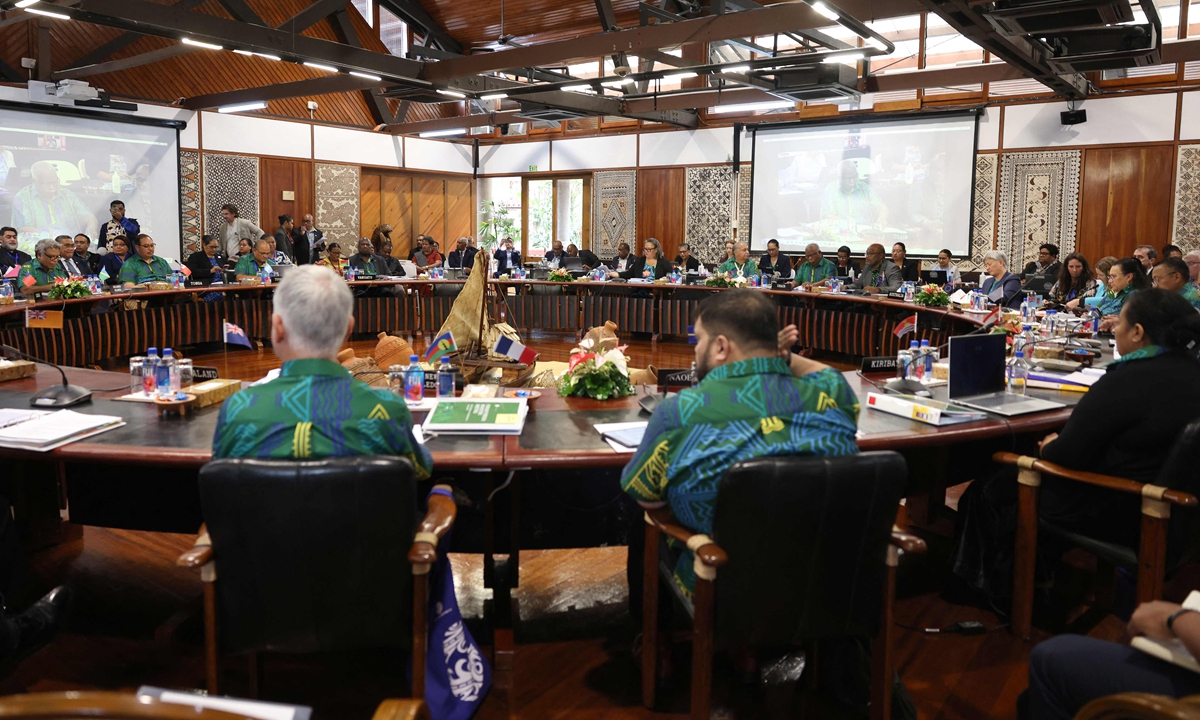
As foreign ministers and senior representatives from Pacific nations convened in Suva for the Pacific Islands Forum (PIF) to discuss key regional issues, New Zealand's foreign minister reportedly pushed to secure a joint statement condemning China's missile tests in July, however, his effort ultimately fell flat. A Chinese expert described the outcome as a clear rebuke to Canberra and Wellington's ingrained habit of speaking for the Pacific, saying the two countries must come to terms with a shifting reality: Pacific Island states are increasingly unwilling to let Australia and New Zealand dictate who their friends, foes and perceived security threats should be.
Pacific Island foreign ministers failed to agree on Friday to a joint response to China's missile launch in July, with further discussions expected at the Pacific leaders meeting at the end of August, said New Zealand Foreign Minister Winston Peters, according to Reuters.
According to a report from Radio New Zealand, there has not been a unanimous statement from Pacific nations about China's test-launch in July, and Peters said New Zealand had been pushing for one. Peters claimed that the Pacific missed an opportunity not to issue a joint statement soon after China's launch.
Australia's Foreign Minister Penny Wong said before the meeting that she hoped China took note of the "very clear response" already sent from the Pacific about the test, according to AFP.
Peters' push for a joint PIF statement on China's missile tests, together with Wong's remarks, are less about technical security concerns than an effort to turn their own anxieties about China into a regional agenda and pressure Beijing under the forum's collective banner. His description of Pacific Island countries' refusal to single out China as a "missed opportunity" also reveals little respect for their independent judgment, Chen Hong, director of the New Zealand Studies Centre, East China Normal University, told the Global Times.
The result is a clear rebuke to Canberra and Wellington's long-standing habit of arrogantly "speaking for" the Pacific, as island states are increasingly unwilling to let Australia and New Zealand decide who their friends, foes or security threats should be, said Chen Hong.
The Chinese People's Liberation Army Navy said on July 6 that one of its strategic nuclear submarines successfully launched a strategic missile toward relevant high seas of the Pacific Ocean, which landed precisely within the designated waters. China notified relevant countries in advance of the test launch, a move that demonstrates the openness and transparency of the Chinese armed forces, Chen Xi, a spokesperson for the Ministry of National Defense, said at a press conference on July 7.
Chen Hong also noted that Peters' recent China-related rhetoric has become increasingly populist and hawkish as elections approach in New Zealand. "Such an approach risks undermining New Zealand's long-standing reputation for pragmatic, independent, and rational diplomacy," Chen Hong said.
In July, during a parliamentary debate on New Zealand's Covid-19 pandemic response, Peters, who is also leader of the populist New Zealand First party, told a Chinese-born lawmaker to "go back to your own country" while mocking his English proficiency. His remarks drew wide criticism in New Zealand.
Yet Australia and New Zealand continued to amplify missile-related issues and great-power rivalry, pushing the "China threat" narrative to the center of the regional agenda while sidelining the priorities that matter most to Pacific Island nations, said Chinese analysts.
Chen Hong noted that for island states, the most urgent concerns are not geopolitical competition but everyday challenges: climate change, energy security, development financing, infrastructure and economic resilience. By shifting the focus from these concerns to strategic rivalry among major powers, Australia and New Zealand risk distorting the region's real priorities and undermining the aspirations of Pacific Island countries.
According to an introduction on the forum website, "The Forum's Pacific Vision is for a resilient region of peace, harmony, security, social inclusion and prosperity, so that all Pacific people can lead free, healthy, and productive lives."
At the opening of the meeting, Rick Houenipwela, foreign minister of the Solomon Islands and chair of the meeting, said that the Pacific's agenda must continue to be "conceived by the Pacific, shaped by the Pacific and only by the Pacific," according to Reuters.
Chen Hong said Pacific Island nations have made their position clear: differences with China do not mean signing up to the strategic agendas of Australia and New Zealand. A growing number of island countries refuse to be trapped in the black-and-white binary choice of siding with either China or the West.
If Canberra and Wellington keep pushing rhetoric beyond the regional consensus, they risk undermining the very institution they claim to support. The PIF's strength lies not in issuing confrontational statements, but in preserving Pacific unity. Turning that consensus into a tool for pressuring China would erode the forum's cohesion and weaken its central role in the region, said Chen Hong.
。 김윤덕 국토교통부 장관과 오세훈 서울시장이 26일 서울 중구 달개비에서 서울 주택 공급 현안을 논의하기 위한 2차 회동을 마친 뒤 악수를 나누고 있다. 박형기 기자 [email protected]서울시가 정부의 용산공원 주택 공급 방안이 철회될 경우 일부 개발제한구역(그린벨트)을 해제해 택지로 활용하는 방안을 논의할 수 있다고 밝혔다. 김윤덕 국토교통부 장관이 26일 오세훈 서울시장과의 면담 이후 ‘그린벨트 해제 검토를 환영한다’고 밝힌 것과 관련해 ‘전제’를 단 것이다.서울시는 이날 입장문을 통해 “서울시가 말씀드린 그린벨트 검토는 정부가 용산공원 내 주택 공급 방침을 철회한다는 것을 전제로 한 것”이라며 “이미 훼손돼 보전가치가 낮은 일부 그린벨트 해제를 검토할 수 있다는 취지”라고 설명했다.이어 서울시는 “정부가 원하는 공급 목표를 달성하면서도 미래세대에 남겨야 할 용산공원을 지킬 수 있도록 탄천물재생센터 등 현실적인 대체부지까지 먼저 제안했다”고 강조했다.그러면서 “정부가 현실 불가능한 용산공원 주장을 내려놓는다면 탄천물재생센터를 비롯한 대체부지와 훼손된 그린벨트 등 서울의 주택 공급 확대를 위한 합리적인 방안을 얼마든지 함께 논의할 준비가 돼 있다”고 덧붙였다.앞서 김 장관은 오 시장과 2차 회동을 한 뒤 페이스북에 오 시장을 향해 “용산 불가론만 고수해선 안 된다”면서 “청년과 신혼부부 등 서울의 미래를 생각해 열린 자세로 임해주시길 바란다”고 적었다. 또 “결과적으로 합의에 이르지 못했나 그린벨트에 대해 전향적으로 검토하겠다는 서울시의 입장에 환영을 표한다”이날 오전 김 장관과 오 시장은 서울 모처에서 만나 약 1시간 가량 용산공원 주택 공급에 대한 의견을 교환했지만 결론을 도출하지 못했다서울시는 어떤 경우에도 용산공원에 주택을 공급하기 어렵다는 입장인 반면, 국토부는 건물이 이미 들어서 있는 등 일부 훼손된 지역을 중심으로 주택을 공급하는 방안을 고수하고 있다.두 사람은 다음주 경 다시 만나 용산공원과 서울시가 제시한 탄천물재생센터 부지 등을 놓고 이견을 좁혀나갈 예정이다.。
Current article:http://fwun7g.cuozubeishenjingli.cfd/njf/20260826/8964.html
Published on:12:52:34
 等着我
等着我 金牌调解
金牌调解